Table Of Content

The exception is when used to cover natural baldness or physical dis-figuration caused by a medical procedure or accident. Tightly maintained and regulated Army grooming standards have been put in place by the U.S. In addition to an update in hair regulations, The Army is introducing a wide range of changes to the uniform and grooming regulations. “In an effort to stop hair damage and loss stemming from hairstyles like the bun, the Army approved healthier hairstyle options that are more inclusive of various natural styles,” said Clark. Mady Segal, a military sociologist and professor emerita at University of Maryland, College Park, said it's an "excellent step forward," but worries that many of these guidelines are specific to women and not inclusive to male soldiers. Army senior leaders approved several upcoming grooming and appearance modifications, said Sgt. Maj. Brian Sanders, senior enlisted leader of Army G-1’s uniform policy branch.
Army announces new grooming, appearance standards - United States Army
Army announces new grooming, appearance standards.
Posted: Wed, 27 Jan 2021 08:00:00 GMT [source]
Ponytails and lipstick: Sweeping changes to Army grooming standards are coming
The Army announced new official hair and grooming regulations on Jan. 26. "Having grooming standards that show sensitivity to the cultural and ethnic diversity already present in our Army would go a long way." "We're looking at, you know, a future of women that will have healthier hair," Barber, an Army Reserve captain, said. "It's important for us to feel like we can walk into the military ... and feel confident in the way that we look and we're not sacrificing our appearance or our hair health." Individuals will not be allowed to wear earrings in a field environment or during a combat-related deployment, or in locations where access to regular hygiene is limited.
Nails
SDF to soften hairstyle rules as recruit shortage worsens - Japan Today
SDF to soften hairstyle rules as recruit shortage worsens.
Posted: Sat, 17 Feb 2024 08:00:00 GMT [source]
Maj. Faren Aimee Campbell, who works in Army logistics in Silver Spring, Md., experienced hair loss and damage from keeping her hair in a bun. Kyle Rempfer was an editor and reporter who has covered combat operations, criminal cases, foreign military assistance and training accidents. Air Force Special Tactics and deployed in 2014 to Paktika Province, Afghanistan, and Baghdad, Iraq.
Army Nail Regulations
"I use the analogy, 'If you look good, you feel good -- and if you feel good, you perform [well]," Sanders said. "If I am in the Army long enough, it would be nice to see how these changes have improved productivity ... and make Soldiers perform better." "This is one of the many facets of putting our people first and recognizing who they are as human beings," he said.
Army Religious Garments Regulations
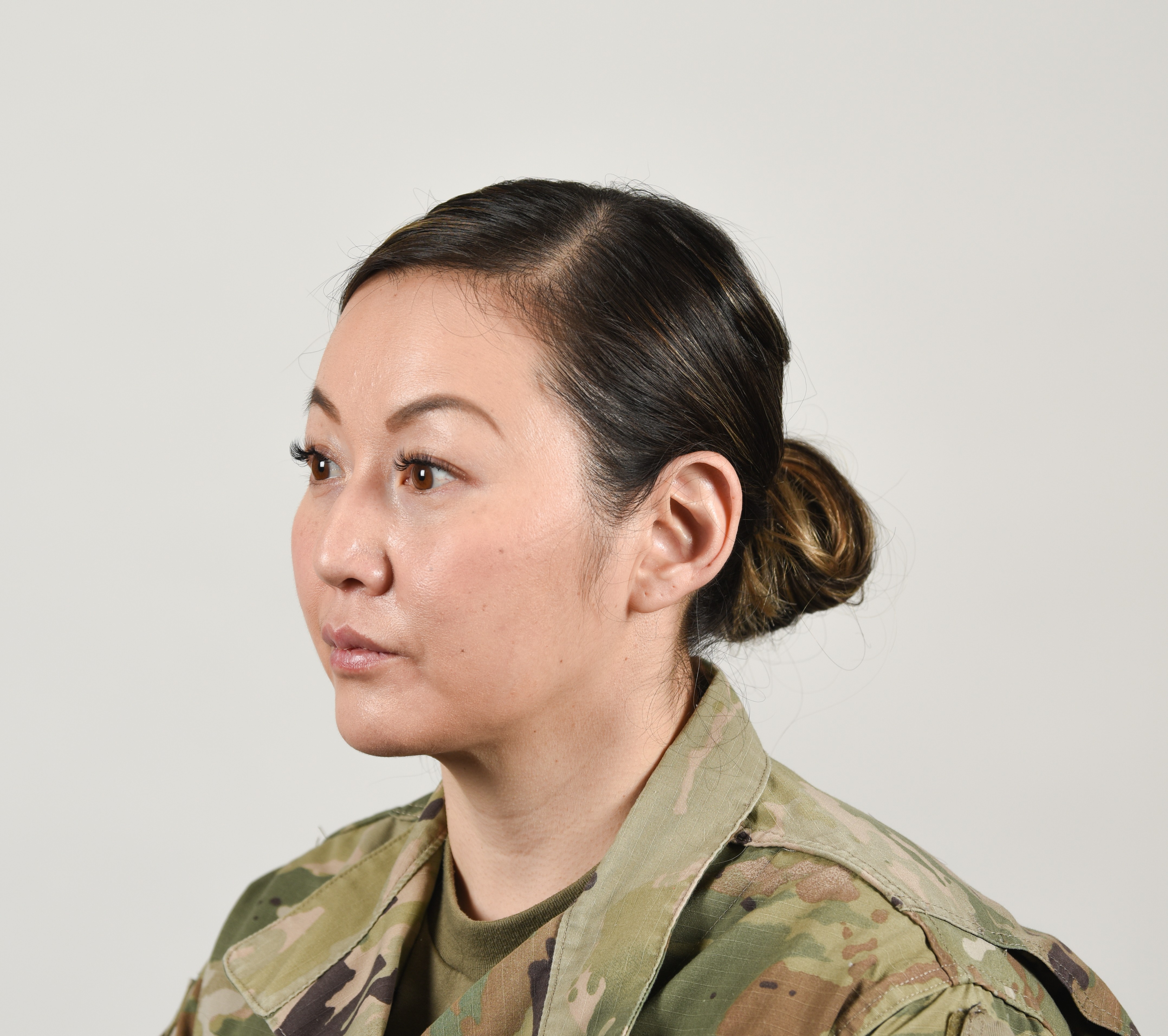
Bold colors such as purple, blue, pink, green, orange, bright red and neon colors are still not permitted. Approved hairstyle changes include no minimum hair length for female Soldiers, allowing multiple hairstyles at once (i.e. braiding, twists or locs). Soldiers will be able to wear ponytails if unable to form a bun, and may wear long ponytails while conducting physical training, in the combat uniform or when female Soldiers wear equipment such as, but not limited to, combat helmets.
Multiple Hairstyles:
Soldiers can wear hijabs when they have an approved religious accommodation request. The hijab must be subdued in color or ACU-compatible camouflage and present a neat appearance. Soldiers must wear hijabs under any required headgear, and they must tuck the bottom of the hijab in the uniform top.
Unauthorized Hairstyles For Women
There are a variety of options available to help you pursue education with flexibility, such as ROTC programs, the GI Bill, and other programs that help pay for college tuition, trade school, technical school, or trainings. Army ROTC has several scholarships available for college-bound high school students. Review your options at ROTC Scholarships, or immediately apply by creating an account at my.goarmy.com to get started. The slides go on to list the psychological impacts of hair loss and how a person’s quality of life is impacted by something like TA which can result in additional challenges like anxiety, depression, and poor body image.
Her inclusion helped create the new rule authorizing buzz cuts for women. Soldiers are required to maintain good personal hygiene and grooming on a daily basis, as well as wear the uniform in a way that does not detract from the overall military appearance. Army mustache regulation is tightly enforced as soldiers are expected to otherwise keep their face clean-shaved when in uniform. However, wigs are not allowed if it is simply used to “cover up unauthorized hairstyles”. It must be styled so it never interferes with the proper use of all military-assigned headgear.
New Army Female Hair Regulations
"It's been a very freeing change within the regulation," Campbell says. Completely shaved heads used to be against the rules that required hair to be at least 1/4 inch long. Dreadlocks, for instance, has ties to the American slavery experience, and will be replaced with “locs,” primer slides shared with reporters read. Still, many of the changes are geared towards women, and that’s intentional. “One thing we can never forget is that at the end of the day, our women are mothers, are spouses, are sisters — they definitely want to be able to maintain their identity, and that’s what we want to get after,” Sanders said. "I think we're making a lot of progress in the Army with these new standards," said USAMRDC Command Sergeant Major Victor Laragione.
Male soldiers can also wear highlights if they follow the standards listed above. The new grooming standards also allow them to shave their hair shorter than ¼ inch. Female soldiers can now wear highlights in their hair if the colors blend together naturally without a “vast difference” between the shades. The U.S. Army is committed to implementing policies that promote inclusivity throughout the ranks. To ensure a standard of equity and based on a July 2020 DoD-directed review, the Army has updated the grooming and hairstyle policies. The updates directly supports the Army’s diversity and inclusion efforts.
It seems some of those changes could be coming to soldiers at the beginning of 2021. It’s unclear which of the changes will be finalized and implemented in the new year. An Army official familiar with the panel said the majority of representatives were women. The undercut is a less common Army haircut; it adheres to regulations involving a longer top section of hair, with the sides and back cut very short or shaven.

Revised hair and grooming regulations will likely be welcomed by female soldiers who’ve long dealt with stringent requirements, such as tight hair buns that can damage their scalps. But service leaders aren’t ignorant to the reality that the changes will likely be derided by others as “politically correct” maneuvering by the Army. The updated standard will also allow females with long hair the option to wear a ponytail while wearing an Army Combat Uniform during physical training, or while wearing tactical headgear during tactical training or combat operations. The Army defines long hair as a length that extends beyond the collar.
Previous hair regulations disproportionately impacted soldiers with textured hair, including women of color. The revisions also removes potentially offensive language used to describe several hairstyles and replaces with appropriate terminology for unauthorized grooming and appearance standards. Leadership at all levels is responsible for enforcing the army hair policy. All soldiers will comply with hair, fingernail, and grooming policies in military uniform or civilian clothes on duty.
Soldiers will also be allowed to have a uniform hair color blend (also known as highlights) as long as it presents a natural appearance. However, purple, blue, pink, green, orange, bright red, fluorescent or neon colors, and some others will be prohibited. Dermatologists involved in the review process provided critical input tied to the updated ponytail policy, Sanders said. The authorized wear of a medium-length ponytail could lower an individual’s risk of hair loss, reduce scarring, or decrease the likelihood of migraine headaches caused by repeatedly pulling hair into a tight bun.
Individuals must also have appropriate size and spacing between each braid, cornrow, twist, or lock, and are authorized one distinct type of hairstyle at one time. The updated standard removes the constraints of dimension requirements. In the audio version of this report, we incorrectly say that Fort Sam is in Houston.
Learn more about Army Eligibility Requirements and how to receive Officer training while in college. And as Peters said at Military.com back in August, Black women “have not always had a voice,” but “the one thing they have always controlled and taken pride in is their hair. “The words ‘extreme’ and ‘exaggerated’ are sufficient when describing violations to the Grooming and Appearance Standard,” the slides say. Grinston teased that changes were coming on Twitter last week, saying hair is “absolutely” something the team leading the Army’s Project Inclusion initiative were working on. The flat-top military haircut is characterized by short sides and back, with the hair on top cut to stand up straight and form a flat-appearing deck.


No comments:
Post a Comment